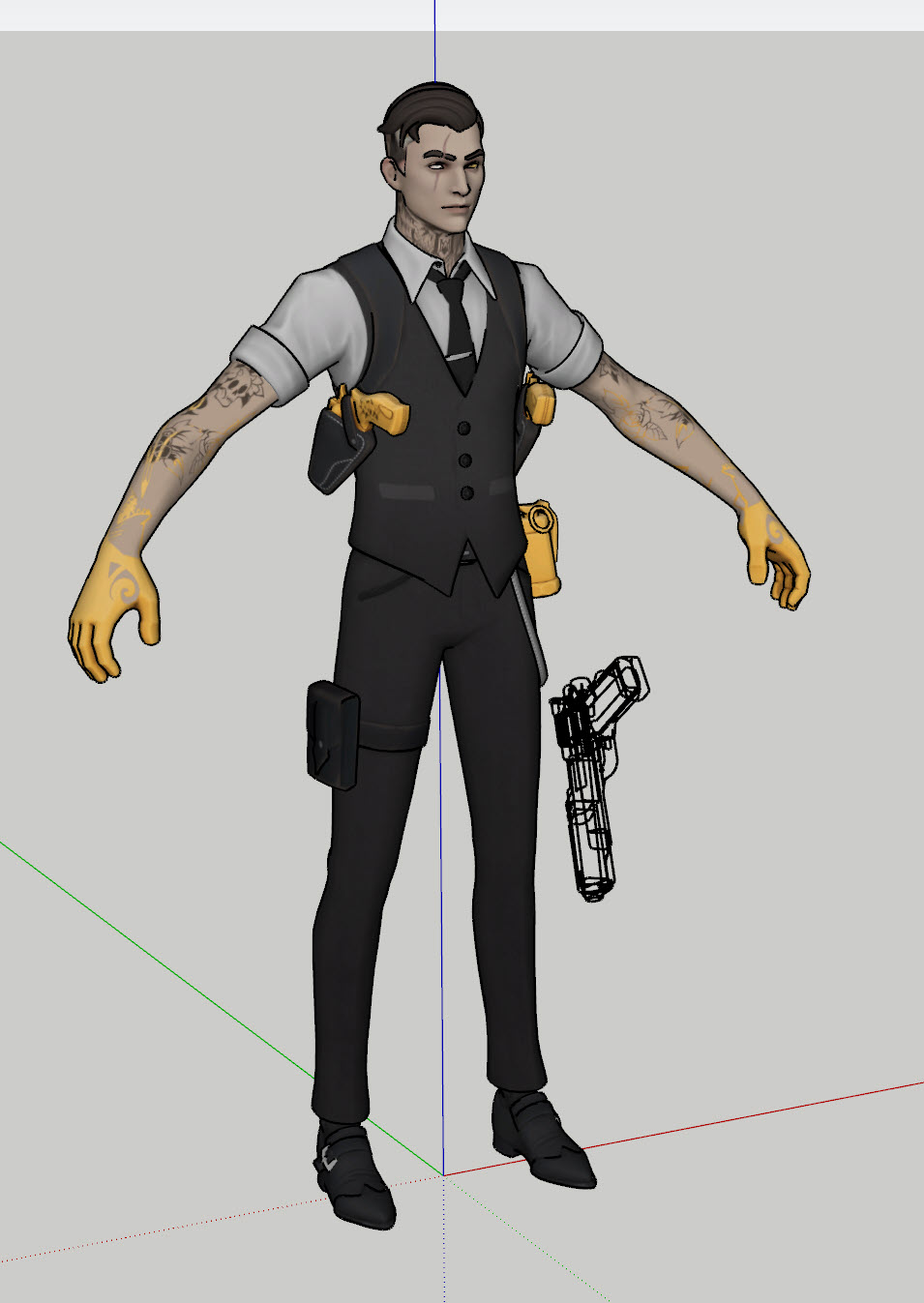
If you download this model and unzip the download, you’ll find the untextured model (source/Midas.fbx) and a series of textures that go with it (textures/*.png)
(I had to use a trial of the Skimp plugin to import this model, btw) (maybe not the best example, but I’m hoping you understand what I’m asking)
How would one go about mapping the textures to a blank, organic shaped model correctly either in Sketchup or maybe some other (free or inexpensive) app?
If your goal is to get the SketchFab model into SketchUp looking correct, you could download the glTF format file instead of the FBX version, then use this extension to add glTF import to SketchUp:
If you want to directly work with the UV mapping in the texture image, you may get somewhere with one of the UV extensions, but I don’t have any experience with any of them:
Most of these models that are imported without textures still have UV mapping on their geometry.
What I usually do is import each texture into the model, scale each texture to 0,0254m (one inch) and then use Thrupaint plugin (by @Fredo6 ) to paint each material into the right surface while keeping UV (the sub tool’s symbol looks like a large brush with a rainbow).
If it doesn’t work it’s because the imported model has no UV mapping and you’ll have to find a workaround to import it.
The best free workaround I know of is importing it into Blender and export it as Collada DAE format, then import it into Skethup.
In blender, if textures won’t import immediately, it might be due to a shading method that doesn’t show textures. If it’s a material/texture import error, it might get tricky… I won’t risk explaining here.
So, you have the fbx.file with uv-mapping info and the texture file.
My workflow with this kind of data: i use 3dsimed. You can import the fbx.file and add the texture file and the you can export these set a skp.file - done.
Trail version avaialbe, full version available for 30GPB.